

Hive Metastore vs Unity Catalog: Key Differences for Databricks Users

 & LatentView Analytics

SHARE

Table of Contents

Key Takeaways

  • Hive Metastore helps manage Hadoop-era metadata workflows, but Databricks officially classifies it as deprecated and recommends migrating to Unity Catalog.
  • Unity Catalog helps organizations maintain one consistent set of permissions, one audit log, and one lineage view across every workspace and cloud.
  • Hive Metastore covers tables and views only, while Unity Catalog extends governance to ML models, AI assets, dashboards, and files.
  • No hard cutover needed. Unity Catalog is additive and can coexist with Hive Metastore through federation during migration.
  • Unity Catalog replaces the metadata governance layer, not Hadoop itself. The two migrations are sequential steps, not competing decisions.
  • Migration becomes urgent at scale: multiple workspaces, multi-cloud operations, AI/ML pipelines, or compliance requirements around lineage and auditing.

Hive Metastore vs Unity Catalog

Hive Metastore is a workspace-level, legacy metadata store built for Hadoop-era workflows, while Unity Catalog is Databricks account-level governance layer built for the modern data lakehouse – covering tables, ML models, and AI assets across clouds under a single access control model.

If you’re running Databricks today, Databricks officially classifies Hive Metastore as a legacy feature and recommends migrating all workloads to Unity Catalog.

This guide covers why that shift matters, where the two tools differ technically, and how to think about the transition.

Effectively managing and organizing data is crucial in today’s data-driven ecosystem. For a long time, Hive Metastore has been the go-to solution in the Hadoop ecosystem, serving as the backbone for metadata management. However, as data requirements continue to evolve, it’s becoming apparent that Hive Metastore might not fully meet the demands of modern data environments. Unity Catalog can work as a contemporary, versatile alternative that addresses today’s challenges more adeptly.

What exactly Is the Hive Metastore?

When working with big data, encountering Hive Metastore is likely. This service, utilized by Apache Hive, a data warehouse built on top of Hadoop, manages metadata. It functions as a catalog, tracking all data elements such as databases, tables, columns, and partitions. This allows Hive to locate and utilize data efficiently across different storage systems.
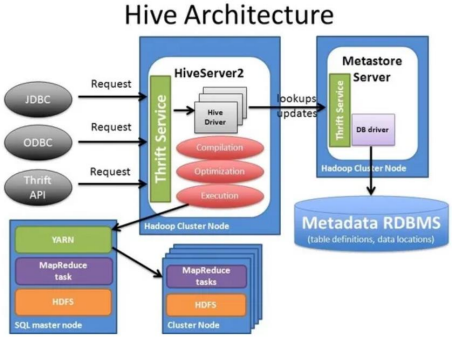
What Is Hive Metastore in Databricks Specifically?

In Databricks, Hive Metastore functions as the default, per-workspace metadata store – referred to in the platform as hive_metastore. It appears as a top-level catalog in Unity Catalog’s three-level namespace (catalog.schema.table), which means existing Hive tables remain accessible even after Unity Catalog is enabled.

That said, Databricks now officially treats Hive Metastore as a deprecated governance pattern. Tables registered in hive_metastore don’t get Unity Catalog’s built-in auditing, data lineage, or fine-grained access control. The access model also differs meaningfully: Hive Metastore applies permissions to workspace-local groups, while Unity Catalog applies them at the account level – a critical distinction for enterprises managing multiple workspaces or cloud environments.

For teams still running Hive Metastore in Databricks, two migration paths exist:

  • A full upgrade to Unity Catalog
  • A federated approach using Hive Metastore federation, which creates a foreign catalog in Unity Catalog that mirrors the existing Hive setup – useful when a full cutover isn’t immediately feasible

Hive Metastore May Be Constraining Capabilities

While Hive Metastore has been a reliable tool, it’s starting to show its age. Here are a few reasons why sticking with it might be more trouble than it’s worth:

  • Limited Format Support: Hive Metastore is closely tied to specific data formats that are part of the Hadoop ecosystem. This can limit the ability to adopt new, more efficient data formats or platforms that don’t play nicely with Hive. Sticking with outdated formats means missing out on new technologies that could enhance data operations and efficiency.
  • Vendor Lock-In: Many Hadoop-based platforms are so tightly integrated with Hive Metastore that switching to another solution often requires a lot of reconfiguration or even a full migration. This dependency can make it hard to be flexible and adapt to new tools or methods that might better suit your needs as your business evolves.
  • Complex Integration: Integrating Hive Metastore with modern data tools and cloud services can be quite challenging. It often requires complex, custom solutions that take time and resources. As more companies move to cloud-native and serverless architectures, seamless integration is key. The complexity of working with Hive Metastore can cause a slowdown, making it harder to keep up with the pace of innovation.
  • Performance Bottlenecks: As data grows in volume and complexity, Hive Metastore can become a bottleneck, slowing down queries and limiting scalability. To keep things running smoothly, constant tweaking and optimization are needed, which adds to operational costs and workload.

What Is Unity Catalog?

Unity Catalog is Databricks’ unified governance solution for the data lakehouse. It helps organizations manage and secure all data and AI assets – tables, views, ML models, dashboards, and files – across multiple clouds and workspaces under a single access control model.

Unlike Hive Metastore, which operates at the workspace level, Unity Catalog works at the account level. That means one consistent set of permissions, one audit log, and one lineage view across every workspace your team runs. It uses a three-level namespace – catalog, schema, table – to organize data objects, and it supports fine-grained access control down to the row and column level.

Databricks open-sourced Unity Catalog in 2024, making it interoperable with compute engines beyond Databricks and positioning it as a governance standard for the broader data lakehouse ecosystem.

Why Unity Catalog Stands Out as the Best Option

Unity Catalog from Databricks offers a modern solution that tackles the challenges posed by Hive Metastore.
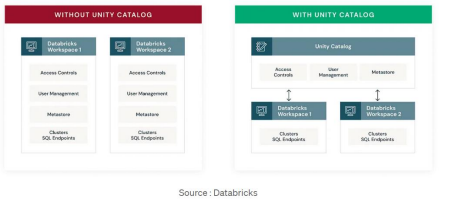
  • Open Source and Interoperable: Unity Catalog is built on open standards, and it is compatible with a wide range of data formats and computing engines. This gives the flexibility to choose the tools that work best for business needs without being tied down to a single vendor.
  • Unified Governance: Unity Catalog offers a centralized way to manage and govern all data and AI assets across cloud environments. It supports everything from tables to machine learning models, all under one governance model. This unified approach simplifies data management, making it easier to stay compliant and consistent across your organization.
  • Seamless Integration: Designed with modern cloud-native architectures in mind, Unity Catalog integrates seamlessly with popular cloud providers and data tools. This reduces complexity and speeds up deployment, leading to faster adoption of changing business needs.
  • Improved Performance and Scalability: Unity Catalog is optimized for performance, enabling efficient metadata management at scale without compromising speed or accuracy. As data grows, Unity Catalog maintains smooth operations, eliminating the need for constant adjustments to settings to preserve performance.
  • Strong Community and Ecosystem Support: By open-sourcing the Unity Catalog, Databricks has built a vibrant community of contributors and partners, including major cloud providers and tech vendors. This community-driven approach means Unity Catalog stays up to date with the latest innovations and has strong support for emerging data and AI technologies.

Hive Metastore vs Unity Catalog: Side-by-Side Comparison

For teams evaluating the two in a Databricks context, the differences come down to architecture, governance model, and what each was built to handle.

DimensionHive MetastoreUnity Catalog
ScopeWorkspace-levelAccount-level (multi-workspace)
Governance modelLegacy table ACLsUnified, fine-grained access control
Data lineageNot supportedBuilt-in, automatic
Audit loggingManual / limitedNative, centralized
Asset coverageTables and viewsTables, views, ML models, AI assets, files
NamespaceTwo-level (schema.table)Three-level (catalog.schema.table)
Multi-cloud supportNoYes
Databricks statusLegacy / deprecatedRecommended for all new workloads
Migration pathNot applicableFull upgrade or Hive federation

The governance gap is where most enterprise teams feel it first. Hive Metastore’s workspace-local permission model breaks down quickly across multi-team or multi-cloud environments. Unity Catalog’s account-level model means one consistent access policy that travels with the data regardless of which workspace or cloud it lives on.

How Does Unity Catalog Relate to Hadoop?

A common point of confusion: Unity Catalog replaces Hive Metastore within the Databricks ecosystem – it isn’t a direct Hadoop replacement. Hadoop is the underlying distributed computing framework; Hive Metastore is the metadata management layer built on top of it.

Unity Catalog addresses the metadata and governance layer specifically. If your organization is still running Hadoop-native workloads outside of Databricks, those remain separate. But for teams that have migrated data workloads to Databricks – or are in the process of doing so – Unity Catalog is the governance layer that replaces Hive Metastore’s role, with significantly broader coverage and modern access controls.

The practical implication: migrating from Hadoop to Databricks and migrating from Hive Metastore to Unity Catalog are often sequential steps in the same modernization journey, not competing decisions.

Frequently Asked Questions

What is the main difference between Hive Metastore and Unity Catalog?

Hive Metastore manages metadata at the workspace level with limited access controls. Unity Catalog operates at the account level, covering multiple workspaces and clouds under a single governance model with built-in lineage and auditing.

Is Hive Metastore still supported in Databricks?

Yes, but it’s classified as a legacy feature. Databricks continues to support Hive Metastore for existing workloads but recommends migrating all tables and views to Unity Catalog and disabling direct Hive Metastore access.

Can Unity Catalog and Hive Metastore run at the same time?

Yes. Unity Catalog is additive – it can coexist with Hive Metastore in the same Databricks workspace. Hive tables appear under the hive_metastore catalog in Unity Catalog’s three-level namespace, allowing you to query both simultaneously during migration.

What is Hive Metastore federation?

Hive Metastore federation is a migration option in Databricks that creates a foreign catalog in Unity Catalog mirroring your existing Hive Metastore. It’s designed for teams that need a gradual transition without an immediate full cutover.

Does Unity Catalog work outside Databricks?

Unity Catalog is open-source and built on open standards, with growing support across compute engines beyond Databricks. However, its deepest native integration is within the Databricks platform.

When should you migrate from Hive Metastore to Unity Catalog?

The migration becomes urgent when your team operates across multiple workspaces, needs cross-cloud data governance, requires data lineage for compliance, or is building AI and ML pipelines that need unified asset management.

Future-Proofing Data Management with Unity Catalog

Unity Catalog presents a modern solution tailored to contemporary data needs. With its open standards, unified governance, seamless integration, and improved performance, Unity Catalog enables organizations to fully leverage their data while remaining adaptable in a dynamic environment.

LatentView Analytics has been helping enterprises make data-driven decisions for nearly 20 years. The company brings deep expertise in data engineering, business analytics, GenAI, and predictive modeling to 30+ Fortune 500 clients across tech, retail, financial services, and CPG. A publicly traded company serving the US, India, Canada, Europe, and Singapore, LatentView is recognized in Forrester's Customer Analytics Service Providers Landscape.

CATEGORY

Take to the Next Step

"*" indicates required fields

consent*

Related Blogs

The world of business has never been as data-driven as it is today. From Google Analytics…

This guide helps financial services marketing leaders across banking, insurance, fintech, and wealth management build a…

This guide helps CPG marketing leaders build and scale a marketing analytics function that connects every…

Scroll to Top