


.svg)
.svg)


Online Sales drove 64% of the CPG growth in the US, as opposed to stores in 2018 [1]. Consumers increasingly preferred eCommerce for purchasing CPG products way before the pandemic, and the purchases are expected to increase 160% from new or low-frequency users post-pandemic [2]. There are 4 major channels for CPG companies to sell their products online – Acquire a DTC brand, sell the products under their brand, launch their own DTC brands, Social Commerce and sell products through E-retailers.
While major CPG players have started embracing DTC brands, most online sales still happen through E-retailers, with Amazon leading the sales. However, in the past few years, E-retailers, such as Amazon, started launching their brands to sell CPG products by getting access to consumer insights through product reviews. To compete with such emerging threats, CPG companies should identify how better to position their products on Amazon’s digital shelf, as 70% of Amazon customers never click past the first page of their search results. [3]
We conducted a research to identify the key factors that influence the position of a Beauty and Personal care product in Amazon’s digital shelf. For this purpose, we used a generic search query “Moisturizer” in “Amazon.com” with delivery location zip code “New York 10106”.
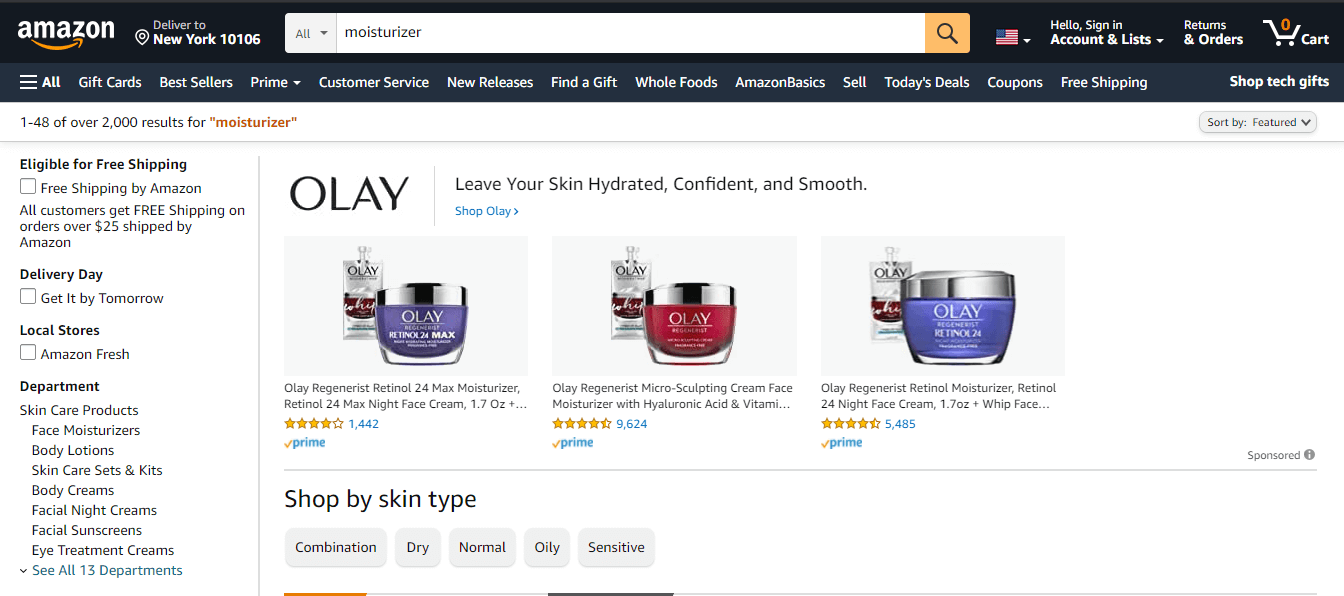
We excluded the sponsored products, duplicate search results, and editorial recommendations and extracted the following information for each product in the first six search result pages (The rest of the pages had out-of-stock products and duplicate search results):
| Extracted Variable | Description |
|---|---|
| Product Name | Name of the product from the search result |
| Next-Day Availability? | Same Day/Next Day availability of the product to the chosen delivery location |
| In Stock? | Whether the product is in stock? |
| Star Rating | Rating *****/5 for each product |
| Rating Count | Total global ratings for the product |
| Answered Questions | Total number of customer questions answered |
| List Price | Price of the product listed on the site |
| Price Per Ounce | Price per ounce for each moisturizer |
| Number of Pictures | Total number of pictures listed on the product page |
| Number of Videos | Total number of videos listed on the product page |
| Subscription Availability | Whether the product is available as a one-time purchase, or can it be subscribed? |
| Discount Availability | Whether the product is available at a discounted price? |
| Selection | Number of styles and sizes from which a product can be chosen |
| Keywords in Name | Total number of keywords – “Moisturizer” in the product name |
| Keywords in Page | Total number of keywords – “Moisturizer” in the entire product page |
| Product Return | Whether the product is returnable within a specified time interval? |
| Ingredient Info | Whether there is any clear information on all the ingredients used in the product? |
| Customer Images | Total number of customer images of the product available from their reviews |
| One Star | 1-star ratings as a percentage of total ratings |
| Five Star | 5-star ratings as a percentage of total ratings |
| Reviews | Total Global reviews for the product |
Products from search page 1 are taken as positive instances, and the rest of the products are taken as negative instances of decision variables for this research. With an event rate of 14%, a classification algorithm is run to identify the independent variables that influence the decision variable. We obtained the following insights from the research:
- Not the star rating (*****/5), but the total number of global ratings influences the digital shelf’s product positioning.

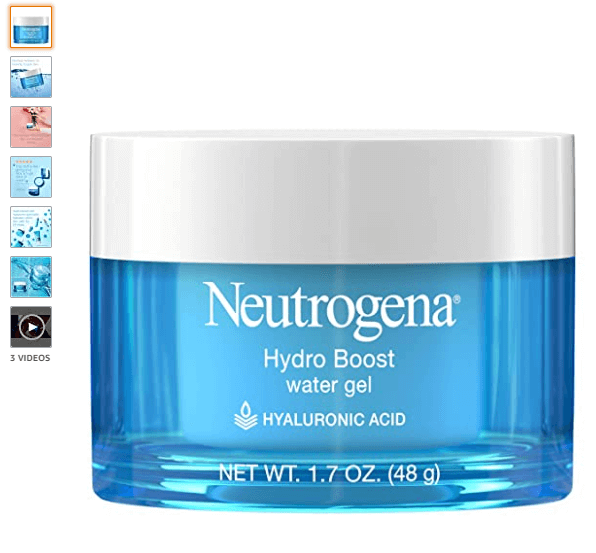
- The higher the number of customer images present on a product page, the higher the chances it gets positioned better. Hence CPG companies could provide consumers incentives such as rewards and coupons to prompt them to drop reviews and ratings for their product

- CPG companies should consider adding more pictures and images of the product on the product page as they significantly influence the product positioning on the digital shelf
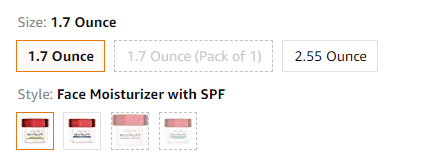
- CPG companies should provide their products in different sizes and styles because when various options from which a consumer can choose your product, it gets listed in a better position among the search result.
The number of keywords – “Moisturizer” present in both the product name and product page influences the product’s better positioning in the amazon search result. CPG companies should consider optimizing their product listing by adding more keywords in the following sections: Product name, Product description, From the Manufacturer, and Answered Questions.
E-retailers are currently well-positioned to spot gaps in the market. Hence, CPG companies, while battling competitors and E-retailers, should also acquire or launch new DTC brands to stay ahead of the competition. According to a survey conducted by BrandShop, 88% of the consumers prefer to buy directly from the brand if given the option [4]. This channel also provides them access to first-hand consumer data and gives them more control over brand, product, and reputation.
References:
- https://www.digitalcommerce360.com/2019/07/08/how-ecommerce-is-changing-the-packaged-goods-market/
- https://www.accenture.com/us-en/insights/consumer-goods-services/coronavirus-consumer-trends-impacting-cpgs
- https://www.searchenginejournal.com/amazon-search-engine-ranking-algorithm-explained/265173
- https://ecommerce-platforms.com/ecommerce-selling-advice/88-of-consumers-prefer-to-buy-directly-from-the-brand