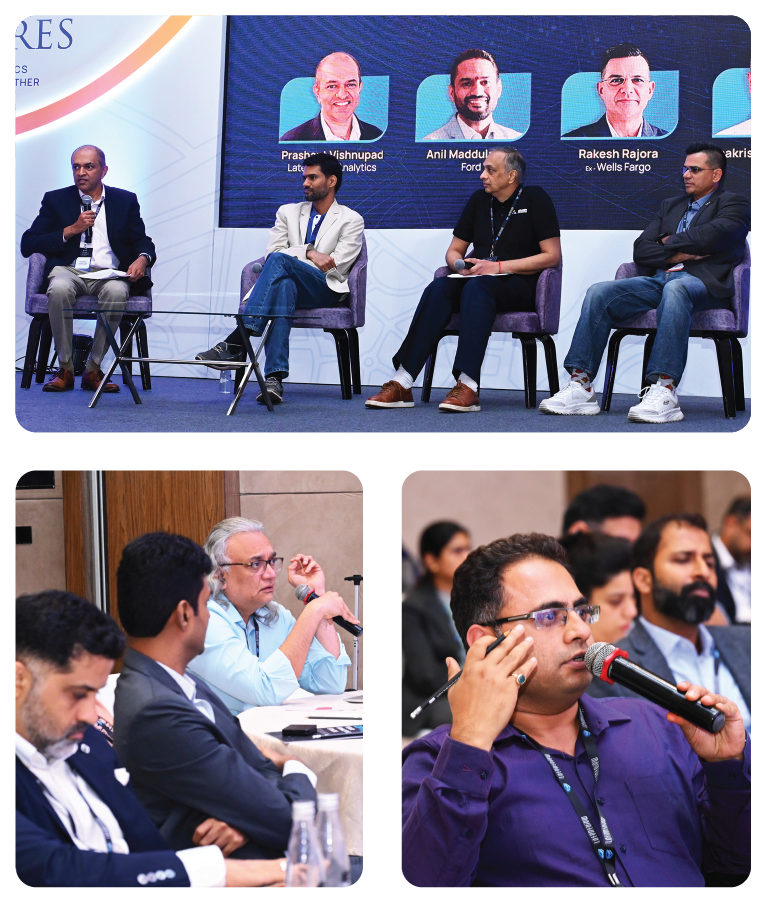


Rakesh brought a different perspective from the financial services sector, where AI and digital transformation have been pivotal. He pointed out an intriguing paradox: personal technology often outpaces workplace technology, compelling industries to adopt more advanced solutions. He shared several examples. Retail analytics, for instance, revealed surprising consumer behavior insights, such as the correlation between diaper and beer purchases. This data-driven insight allowed retailers to strategically place products, boosting sales.
In banking, AI has significantly streamlined operations. Rakesh shared how Wells Fargo used robotics and AI to enhance customer service and operational efficiency. By automating routine tasks like balance inquiries, they freed up human resources for more complex issues, exemplifying how digital transformation can lead to tangible benefits.
Ramakrishnan discussed MInt’s (Mobility and Intelligent Transportation Collaborative) ambitious goal of transforming the mobility ecosystem at a national scale. He identified three primary challenges: data access and management, cybersecurity, and policy design. There is a dire need for designing policies that translate into meaningful outcomes, ensuring that systems are user-centric and responsive to their needs.
Furthermore, Ramakrishnan highlighted the need for a collaborative ecosystem. By integrating real-time data exchange and fostering cooperation among various stakeholders—government agencies, private companies, and citizens—MInT aims to build a connected infrastructure that enhances safety and efficiency in transportation. He underscored the importance of digital twin technology in product development, enabling real-time monitoring and improvements.
The panelists provided compelling examples of how digital transformation has led to tangible outcomes in their respective fields. Anil recounted how Ford optimized its supply chain during the chip shortage by using data algorithms to prioritize high-profit vehicles, thereby improving production planning and inventory management.
In the financial sector, Rakesh described how Wells Fargo utilized robotics and AI to revolutionize customer service. By automating mundane tasks and creating a unified customer view through intelligent APIs, they significantly enhanced the customer experience and operational efficiency.
These insights underscore that digital transformation is not a one-size-fits-all solution but a multifaceted journey that requires a deep understanding of data, strategic initiatives, the right talent, and the innovative use of AI. By addressing these core components, organizations can drive tangible outcomes, ensuring they stay ahead of the curve.