.svg)
.svg)


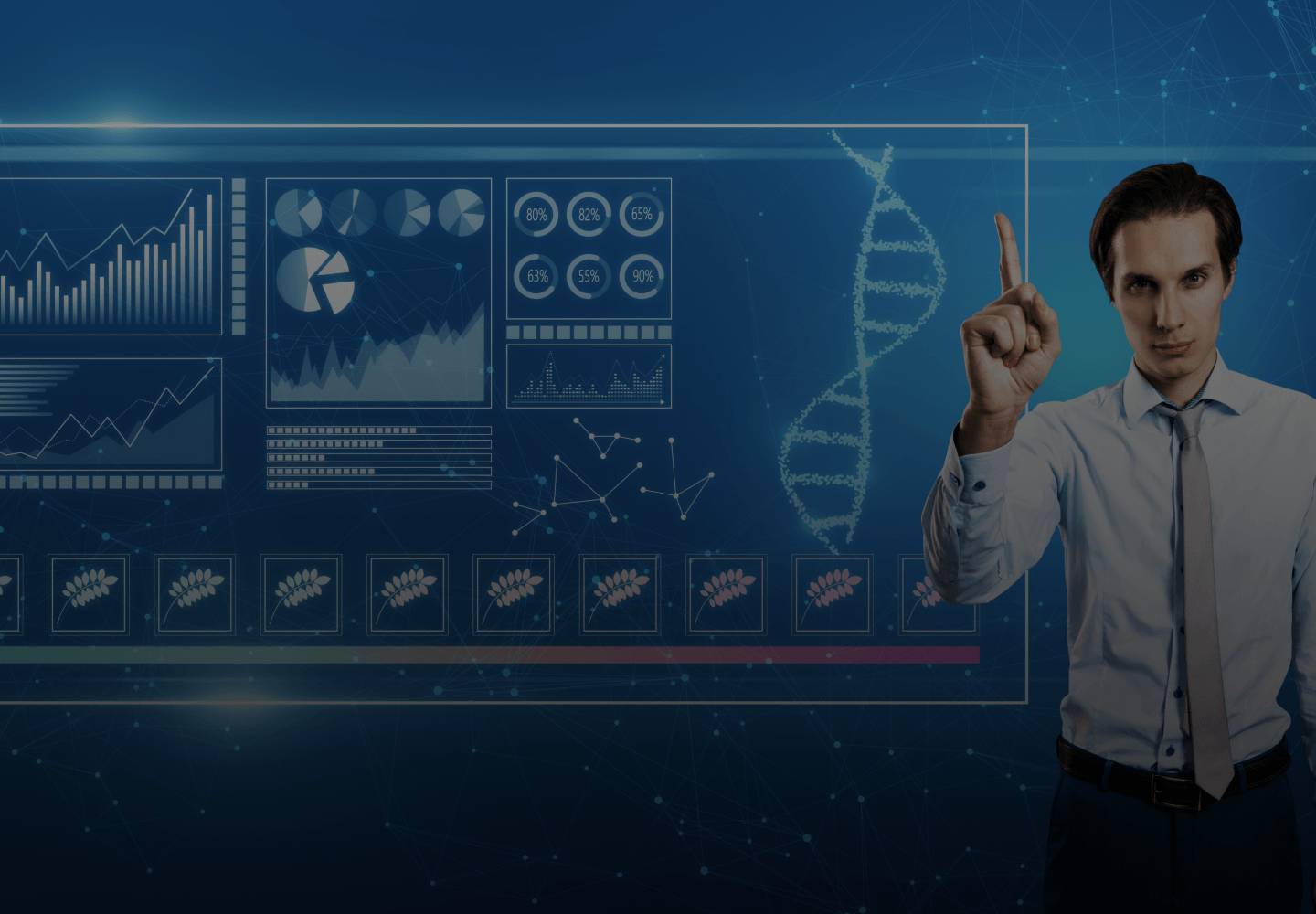

Predictive analytics in healthcare is the use of historical and real-time data, machine learning, and AI to forecast future health outcomes, disease trends, and operational needs. It helps identify patients at risk of chronic conditions, optimize hospital staffing, and guide clinical decisions.
Every health system already sits on more data than it can use. The organizations pulling ahead are the ones turning it into foresight, predicting which patients will deteriorate, which claims will be denied, and where demand will spike, then acting before the event. That is the work of predictive analytics in healthcare: it flags at-risk patients, optimizes staffing, and guides clinical decisions ahead of time. The money is following the shift, with the market projected to grow more than 24% a year and pass $50 billion by 2030 (Grand View Research). This guide is written for the CIO, CDO, CMIO, and heads of revenue cycle, population health, and operations who own those outcomes.
Key Takeaways
- Predictive analytics in healthcare forecasts future events from historical and real-time data using statistical and machine learning models.
- It differs from predictive modeling: modeling builds the algorithm, while predictive analytics is the end-to-end practice of turning data into a decision.
- It is used across clinical care, operations, and financial and revenue management.
- High-impact use cases include readmissions, risk stratification, clinical decision support, revenue cycle, member retention, fraud, and Patient 360.
- Agentic AI is the next step, moving healthcare predictive analytics from prediction to autonomous action, especially in the revenue cycle.
What Is Predictive Analytics in Healthcare? Definition and How It Differs From Predictive Modeling
Predictive analytics in healthcare applies statistical modeling, data mining, and machine learning to health data such as records, claims, and device signals to forecast what is likely to happen next. It answers which patients face readmission, which claims will be denied, and where demand will rise.
Predictive analytics in healthcare applies statistical modeling, data mining, and machine learning to health data, such as electronic health records, claims, and device signals, to forecast what is likely to happen next. It answers questions like which patients are at risk of readmission, which claims are likely to be denied, and where demand will spike.
How It Differs From Predictive Modeling
- Predictive analytics: the end-to-end practice, from gathering and preparing data to building models, interpreting results, and acting on them in a clinical or operational workflow.
- Predictive modeling: the technical step inside that practice, building and training the algorithm that generates the forecast.
The value comes from the full loop, because a model that never reaches a decision changes nothing.
How Does Predictive Analytics in Healthcare Work? The Models and Techniques
Predictive analytics in healthcare works in four stages, collecting and preparing data, modeling it, and integrating the output into workflows. It draws on regression, machine learning classification, neural networks, and gradient boosting to turn raw health data into reliable risk scores.
The discipline follows a repeatable lifecycle, draws on several model families, and powers a set of core applications.
How the Process Works
- Data collection and aggregation: pull data from electronic health records, laboratory results, medical imaging, and wearable IoT devices.
- Preprocessing: clean, normalize, and format the raw, often messy data so it is ready for analysis.
- Modeling: train algorithms on historical data to surface patterns and correlations between variables and specific health outcomes.
- Integration: deliver the output, a risk score or alert, into the clinician’s workflow through dashboards and alerts inside the EHR.
Common Models and Techniques
- Regression analysis: models such as logistic regression estimate the probability of an outcome, like the likelihood a patient is readmitted within 30 days.
- Machine learning classification: random forests and support vector machines sort data into classes, such as malignant against benign on imaging, or high against low chronic-disease risk.
- Neural networks and deep learning: analyze complex, unstructured data such as clinical notes, X-rays, and genetic sequences, catching intricate patterns a human observer would miss.
- Gradient boosting: methods such as XGBoost select the most predictive clinical variables from large datasets, computing reliable risk scores quickly.
Core Applications
- Predictive diagnosis: identify early warning signs of disease, such as early-stage cancer on imaging, before severe symptoms present.
- Patient stratification: group populations by risk level so care managers concentrate preventive resources where they matter most.
- Operational efficiency: forecast admission surges and bed occupancy to optimize staffing and reduce administrative bottlenecks.
How Is Predictive Analytics Used in Healthcare?
Predictive analytics in healthcare analyzes historical and real-time data such as electronic health records, lab results, and wearable signals to forecast future outcomes. It enables early disease detection, prevents readmissions, personalizes treatment, and optimizes staffing and operations.
The applications group into a few domains, and mature organizations pursue them on one shared data foundation.
Application area | What it covers |
|---|---|
Clinical care | Early disease detection, risk prediction, clinical decision support, personalized treatment |
Operations | Demand, capacity, and staffing forecasting, patient flow, supply management |
Financial and revenue | Denial prediction, revenue-cycle optimization, fraud detection |
Population and member health | Risk stratification, patient engagement, health equity |
Predictive Analytics in Healthcare: High-Impact Enterprise Use Cases
High-impact use cases of predictive analytics in healthcare include readmission prevention, risk stratification, and clinical decision support. They extend to prior authorization, member retention, fraud detection, revenue cycle management, and Patient 360 across providers and payers.
Predictive analytics proves its value in the decisions it changes. These eight use cases are where healthcare organizations see the clearest return, spread across clinical care, operations, and finance.
Use Case 1: Hospital Readmission Prediction and Prevention
Readmissions are among the most tracked and costly problems in healthcare, and a large share are preventable. Predictive models score each patient’s readmission risk at discharge by combining diagnoses, prior utilization, medication history, lab values, and social factors such as housing and transportation. That single score lets care teams concentrate their scarce follow-up capacity, medication reconciliation, home visits, and telehealth check-ins, on the patients most likely to come back.
Avoidable readmissions cost the US health system billions of dollars a year (AHRQ). For example, a health system flags a discharged heart-failure patient as high-risk, schedules a 72-hour telehealth check-in and a pharmacist medication review, arranges transport to the follow-up visit, and heads off a return trip to the emergency department inside the 30-day penalty window.
Use Case 2: Patient Risk Stratification and Chronic Disease Management
Chronic conditions account for the bulk of US healthcare spending, and cost climbs sharply once a condition escalates into complications or hospitalization (CDC). Risk stratification finds the patients trending toward that escalation while there is still time to intervene.
- What the model does: reads lab trends, medication adherence, utilization patterns, and social determinants to score each patient and rank a population from low to rising to high risk.
- Why it matters: care management is a finite resource, and stratification points it at the patients where early, inexpensive action prevents the most expensive outcomes.
- Example: a model surfaces the small share of a diabetic population whose rising HbA1c and refill gaps signal looming complications, then enrolls them in a targeted coaching and monitoring program before an avoidable hospitalization.
Use Case 3: Clinical Decision Support and Early Deterioration Detection
Inside the hospital, minutes decide outcomes. Real-time models continuously read vitals, labs, nursing notes, and monitor feeds to flag clinical deterioration hours before it becomes a crisis, giving clinicians a head start on sepsis, respiratory decline, or cardiac events.
The prediction surfaces as an alert or a risk score inside the EHR, so the care team can order tests, escalate, or intervene while there is still a wide window to change the patient’s trajectory.
Use Case 4: Prior Authorization and Claims Automation
- The problem: administrative friction is one of the largest sources of cost, delay, and staff burnout in US healthcare, and denials and prior-authorization back-and-forth sit at the center of it.
- What the model does: predicts which claims are likely to be denied before submission, checks them against payer rules, and speeds prior authorization by assembling the required clinical documentation automatically.
- Example: a provider’s system scores a claim as high-denial-risk, surfaces the specific missing documentation, and routes it for a clean first submission that avoids a costly appeal and speeds the patient’s approval.
Use Case 5: Member Churn and Retention Prediction
For health plans, retaining a member is as valuable as acquiring one, and for providers, patients who drift out of care drive both worse outcomes and lost revenue. Predictive models identify members likely to disenroll and patients disengaging from care by reading claims activity, engagement signals, satisfaction data, and gaps in expected visits.
That early signal lets the plan or provider reach the right person at the right moment with a personalized retention, re-engagement, or care-navigation campaign, well before the relationship is lost.
Use Case 6: Fraud Detection and Claims Integrity
Fraud, waste, and abuse are estimated to drain 3% to 10% of US healthcare spending, which runs into the tens of billions of dollars a year (NHCAA).
Predictive models flag anomalous billing patterns and claims that deviate from a provider’s or peer group’s norm, scoring each for review so payers can investigate before payment goes out. For example, a model catches an improbable spike in high-reimbursement procedure combinations from a single clinic, routes it to a special-investigations team, and stops a fraudulent payout that fixed rule checks would have missed.
Use Case 7: Revenue Cycle Management
- The problem: the revenue cycle is where clinical delivery meets financial reality, and leakage anywhere in it, from eligibility to coding to collections, erodes margin.
- What the model does: runs end to end across the cycle to forecast denials, score each account’s propensity to pay, prioritize collection effort, and pinpoint exactly where revenue is leaking.
- Example: a health system predicts denial risk at the point of service, fixes the root cause upstream in registration and coding, and protects net revenue that would otherwise be written off weeks later.
Use Case 8: Patient 360 for Personalized Engagement and Care
Most predictions are only as good as the view of the patient behind them, and in most organizations that view is fragmented across EHRs, claims systems, engagement platforms, and point solutions. A Patient 360 unifies EHR, claims, engagement, lab, and social determinant data into one longitudinal profile that becomes the shared substrate every other model in this list runs on.
With that single source of truth, a care team can see the full history across every setting, personalize outreach to how each patient actually engages, and coordinate the care that scattered, siloed records would have caused them to miss.
Key Benefits of Predictive Analytics in Healthcare
Predictive analytics in healthcare improves patient outcomes, enables earlier intervention, and lifts operational efficiency. It also protects cost and revenue by reducing avoidable admissions, fraud, and denials, and it supports health equity across populations.
The benefits land across clinical, operational, and financial lines.
- Better patient outcomes: earlier detection and targeted intervention reduce complications, readmissions, and adverse events.
- Earlier intervention: teams act on risk while it is still manageable, well ahead of a crisis.
- Operational efficiency: sharper forecasting improves capacity, staffing, and throughput without adding headcount.
- Cost and revenue protection: fewer avoidable admissions, less fraud, and fewer denials protect both spend and net revenue.
- Health equity: stratifying risk with social determinants helps target support to underserved populations.
Challenges of Predictive Analytics in Healthcare: HIPAA, Bias, and Data Silos
The main challenges of predictive analytics in healthcare are fragmented data silos, HIPAA and privacy requirements, and algorithmic bias. Model trust, validation, and clinician adoption also decide whether predictions reach the point of care and change a decision.
Healthcare’s hardest problems are less about algorithms and more about foundations. Each has a clear way to address it.
Challenge | How to address it |
|---|---|
Data silos and quality | Unify fragmented data in a governed foundation so models train on complete, trusted data |
HIPAA and privacy | Build access control, de-identification, and business associate agreements in from the first pipeline |
Algorithmic bias and health equity | Test for bias and train on diverse, representative data to avoid widening disparities |
Model trust and validation | Validate rigorously with metrics like AUROC, and add explainability so clinicians trust the output |
Clinician adoption | Design predictions into the point-of-care workflow where clinicians already work |
How Agentic AI Is Advancing Healthcare Predictive Analytics
Agentic AI moves healthcare predictive analytics from prediction to autonomous action, monitoring data, deciding, and acting within guardrails. Its clearest early proving ground is the revenue cycle, where agents correct, resubmit, and follow up on claims on their own.
Traditional predictive analytics produces a forecast and waits for a human to act. Agentic AI closes that gap. An agentic system monitors data continuously, makes a prediction, and takes the next step on its own within guardrails, escalating to a human when judgment is needed.
The revenue cycle is the clearest early proving ground. Where traditional analytics flags a likely denial for a person to fix later, an agentic system corrects the documentation, resubmits the claim, and follows up on its own, closing the gap before revenue is written off. The same pattern extends to prior authorization, care coordination, and patient outreach. Governance matters more here than anywhere, because an agent takes real action on real patients and real dollars, so guardrails, audit logging, and human oversight are non-negotiable.
How to Build a Predictive Analytics Capability: The 6-Step Enterprise Framework
Building a predictive analytics capability in healthcare takes six steps, from assessing data readiness and prioritizing a use case to building a governed foundation. The final steps develop and validate the model, establish HIPAA governance, then deploy, measure, and scale it.
Enterprise readiness matters more than model sophistication. Here is the framework at a glance, then each step in detail.
Step | Outcome |
|---|---|
1. Assess data readiness | You know whether your data can support reliable models |
2. Set the goal and prioritize | One measurable use case, backed by leadership |
3. Build the governed foundation | A single trusted data layer for every model |
4. Develop and validate | A model that is accurate and safe to trust |
5. Establish HIPAA governance | A capability that stands up to audit |
6. Deploy, measure, and scale | Live impact and a pattern you can repeat |
Step 1: Assess Data Readiness
Audit the EHR, claims, device, and social data your models depend on, checking quality, completeness, and interoperability through standards such as FHIR and HL7. Fragmented, low-quality data is the most common reason healthcare AI fails, so this step decides everything that follows.
Step 2: Set the Business Goal and Prioritize a Use Case
Choose one measurable, high-impact target, such as readmissions or denials, where the outcome is clear and the data is available. A focused first win builds capability and executive confidence for the next.
Step 3: Build the Governed Data Foundation
Unify the fragmented sources into one governed foundation, so every model trains on data that is complete, current, and trusted across the enterprise.
Step 4: Develop and Validate the Model
Select the right technique for the problem, train it on representative data, and validate rigorously with metrics such as AUROC, testing for bias and adding explainability before anything reaches a patient.
Step 5: Establish HIPAA Governance and Responsible AI
Put access controls, de-identification, audit trails, bias monitoring, and model governance in place before scaling, aligned to HIPAA and responsible-AI expectations, so the capability is compliant and defensible from day one.
Step 6: Deploy, Measure, and Scale
Deliver predictions into the clinical or operational workflow where they drive a decision, monitor for data drift and model degradation, measure clinical and financial outcomes against the goal, and extend the proven pattern to the next use case on the shared foundation.
Why Healthcare Leaders Partner With LatentView
Most vendors sell one layer, engineering, or data science, or advice, and leave the CIO to stitch the rest together. LatentView is an end-to-end analytics partner that pairs data engineering, data science, and domain expertise in one engagement on a governed, platform-fluent Databricks foundation.
In healthcare it goes where the money and the risk are: revenue cycle management, Patient 360, and agentic AI for operations. Behind that sit Databricks Gold Tier Partner status, a 400-engineer Center of Excellence, 20+ years of enterprise analytics, and Forrester Leader recognition in Customer Analytics Services.
The proof is already on the board. The IMF Patient 360 dashboard, built for the International Myeloma Foundation, won the Minsky Award and IMF Partner of the Year. And in April 2026, LatentView put $3M into Healtheon AI and became a preferred deployment partner for its autonomous, multi-agent revenue-cycle platform, whose agents automate coding, claims, and denial work and shift operations from reactive recovery to proactive prevention (National Law Review). Predictive analytics earns its keep only when it changes a decision, and that is what LatentView is built to deliver, turning analytics into Accurate Decisions.
FAQs
What is predictive analytics in healthcare?
Predictive analytics in healthcare is the practice of analyzing historical and real-time data, such as EHR, claims, and device data, with statistical and machine learning models to forecast clinical and operational events and act on them.
What is the difference between predictive analytics and predictive modeling in healthcare?
Predictive modeling is the technical step of building and training the algorithm. Predictive analytics is the end-to-end practice around it: preparing data, modeling, interpreting the result, and acting on it in a workflow.
How is predictive analytics used in healthcare?
It is used across clinical care, such as risk prediction and early detection, operations, such as demand and staffing forecasting, and financial and revenue management, such as denials, fraud, and the revenue cycle.
What are the main use cases of predictive analytics in healthcare?
Common use cases include readmission prevention, risk stratification, clinical decision support, prior authorization and claims automation, member retention, fraud detection, revenue cycle management, and Patient 360.
What are the challenges of predictive analytics in healthcare?
The main challenges are fragmented data and silos, HIPAA and privacy requirements, algorithmic bias and health equity, model trust and validation, and fitting predictions into clinician workflows.
How is AI changing predictive analytics in healthcare?
Agentic AI is moving predictive analytics from producing a forecast to taking autonomous action within guardrails, with revenue cycle management as an early, high-value proving ground.
Sources
- Grand View Research, Healthcare Predictive Analytics Market: market size and growth rate.
- AHRQ, Hospital Admission Versus Readmission Costs: cost of hospital readmissions.
- CDC, Fast Facts: Health and Economic Costs of Chronic Conditions: chronic disease share of US healthcare spend.
- NHCAA, The Challenge of Health Care Fraud: healthcare fraud as a share of spending.
- LatentView’s $3M investment in Healtheon AI for healthcare revenue cycle management, reported by The National Law Review, FinTech Global, and Outlook Business.
Additional LatentView proof points (IMF Patient 360, Databricks Gold Tier Partner, Forrester recognition) are sourced from LatentView solution pages and case studies on latentview.com; link the specific case studies on publish.